

What is the origin of the materials used in hotel bed covers?
Aug 21, 2026
Yo! I'm a supplier of hotel bed covers, and today I wanna dig deep into the origin of the materials we use for these cozy essentials. You might be thinking, "Why does it even matter where the materials come from?" Well, let me tell you, it matters a whole lot. The origin of the materials can affect the quality, durability, and even the environmental impact of the bed covers. So, let's get started!
Cotton: The Classic Choice
Cotton is hands down one of the most popular materials for hotel bed covers. It's soft, breathable, and hypoallergenic, making it a great choice for guests with sensitive skin. But where does this amazing material come from?
Cotton plants are grown in many parts of the world, but some of the top cotton-producing countries include the United States, China, India, and Pakistan. The process of turning cotton plants into fabric is quite fascinating. First, the cotton bolls are harvested from the plants. Then, they're ginned to separate the cotton fibers from the seeds. After that, the fibers are spun into yarn, which is then woven or knitted into fabric.
One of the reasons why cotton is so popular in the hotel industry is its versatility. It can be used to make a variety of bed cover products, such as Hotel Bed Spread. These spreads come in different colors, patterns, and designs, allowing hotels to customize their bedding to match their decor.
Linen: The Elegant Option
Linen is another high-quality material that's often used in hotel bed covers. It's made from the fibers of the flax plant, which is primarily grown in countries like France, Belgium, and Ireland. Linen has a distinct texture that gives it an elegant and luxurious look.
The flax plant is harvested, and then the fibers are extracted from the stalks through a process called retting. After retting, the fibers are spun into yarn and then woven into fabric. Linen is known for its breathability, absorbency, and durability. It gets softer with each wash, making it a favorite among hotel guests.
Hotels often use linen for their bed sheets and pillowcases to provide a comfortable and upscale sleeping experience. And if you're looking for high-end Hotel Bed Spread made from linen, you're in for a treat. The natural texture and sheen of linen add a touch of sophistication to any hotel room.
Microfiber: The Practical Alternative
Microfiber is a synthetic material that has gained popularity in the hotel industry in recent years. It's made from extremely fine fibers that are typically a blend of polyester and polyamide. Microfiber is known for its softness, durability, and resistance to wrinkles.
One of the advantages of microfiber is its affordability. It's often less expensive than natural materials like cotton and linen, making it a cost-effective choice for hotels. Additionally, microfiber is easy to clean and maintain, which is a big plus in a hotel setting.
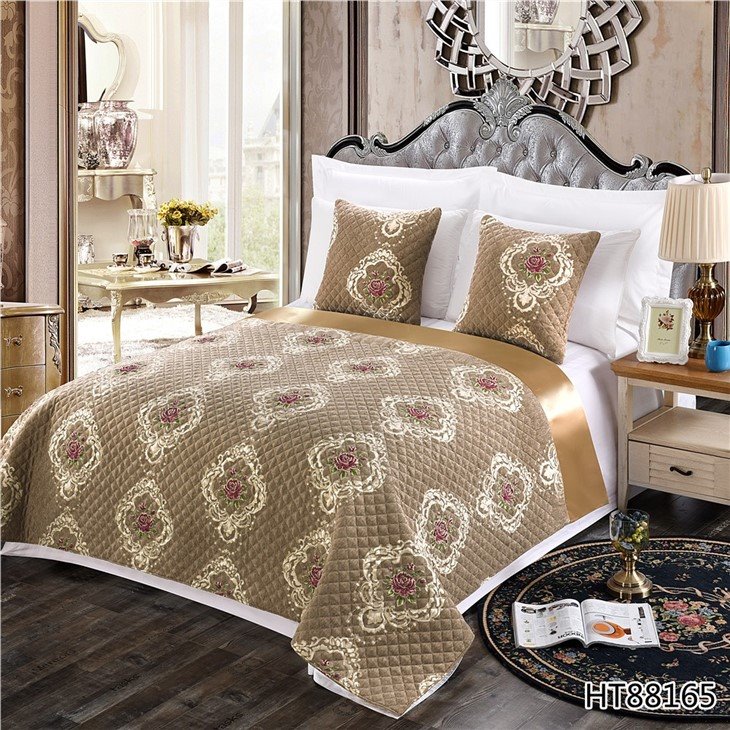

Many hotels use microfiber for their High quality bed skirts because it can hide the area under the bed neatly and keep the room looking tidy. Microfiber bed spreads are also popular as they come in a wide range of colors and are fade-resistant.
Silk: The Luxury Material
Silk is the ultimate luxury material when it comes to hotel bed covers. It's made from the cocoons of silk worms, which are mainly cultivated in countries like China, India, and Thailand. Silk has a smooth and shiny texture that feels incredibly soft against the skin.
The process of making silk is quite labor-intensive. First, the silk worms are fed mulberry leaves until they spin their cocoons. Then, the cocoons are boiled to kill the worms and loosen the silk fibers. The fibers are then unwound and spun into yarn, which is woven into silk fabric.
Silk is not only luxurious but also has many benefits. It's hypoallergenic, breathable, and regulates body temperature, making it a great choice for a good night's sleep. Hotels that want to offer a premium experience often use silk for their bed sheets, pillowcases, and Hotel Bed Spread.
Environmental Considerations
When it comes to the origin of the materials used in hotel bed covers, it's also important to consider the environmental impact. For example, conventional cotton farming uses a lot of water, pesticides, and fertilizers, which can be harmful to the environment. However, there are now options like organic cotton, which is grown without the use of synthetic chemicals.
Linen is considered a more sustainable option as the flax plant requires less water and pesticides compared to cotton. Microfiber, on the other hand, is a synthetic material, but some manufacturers are now producing eco-friendly microfiber made from recycled materials.
Silk production also has its challenges, but there are efforts to make it more sustainable, such as promoting ethical silk farming practices.
Why Choose Our Hotel Bed Covers?
As a hotel bed cover supplier, I take pride in offering high-quality products made from the best materials. Whether you're looking for the classic comfort of cotton, the elegance of linen, the practicality of microfiber, or the luxury of silk, we've got you covered.
We source our materials from reliable suppliers who follow strict quality standards. This ensures that our bed covers are not only beautiful but also durable and comfortable. We offer a wide range of products, including Hotel Bed Spread and High quality bed skirts, in various styles and colors to meet your specific needs.
Let's Talk!
If you're in the hotel business and looking to upgrade your bedding, I'd love to have a chat with you. We can discuss your requirements, explore different material options, and find the perfect bed covers for your guests. Whether you have a small boutique hotel or a large resort, we can provide customized solutions that fit your budget and style. So, don't hesitate to reach out and let's start this exciting journey together!
References
- "Textile Fibers: Cotton," Textile Institute.
- "Linen Production and Properties," Flax Council of Canada.
- "Microfiber: A Modern Textile Revolution," Textile Research Journal.
- "The Art and Science of Silk Production," Silk Association of China.